CRM Development & Integration
Part of What We Do
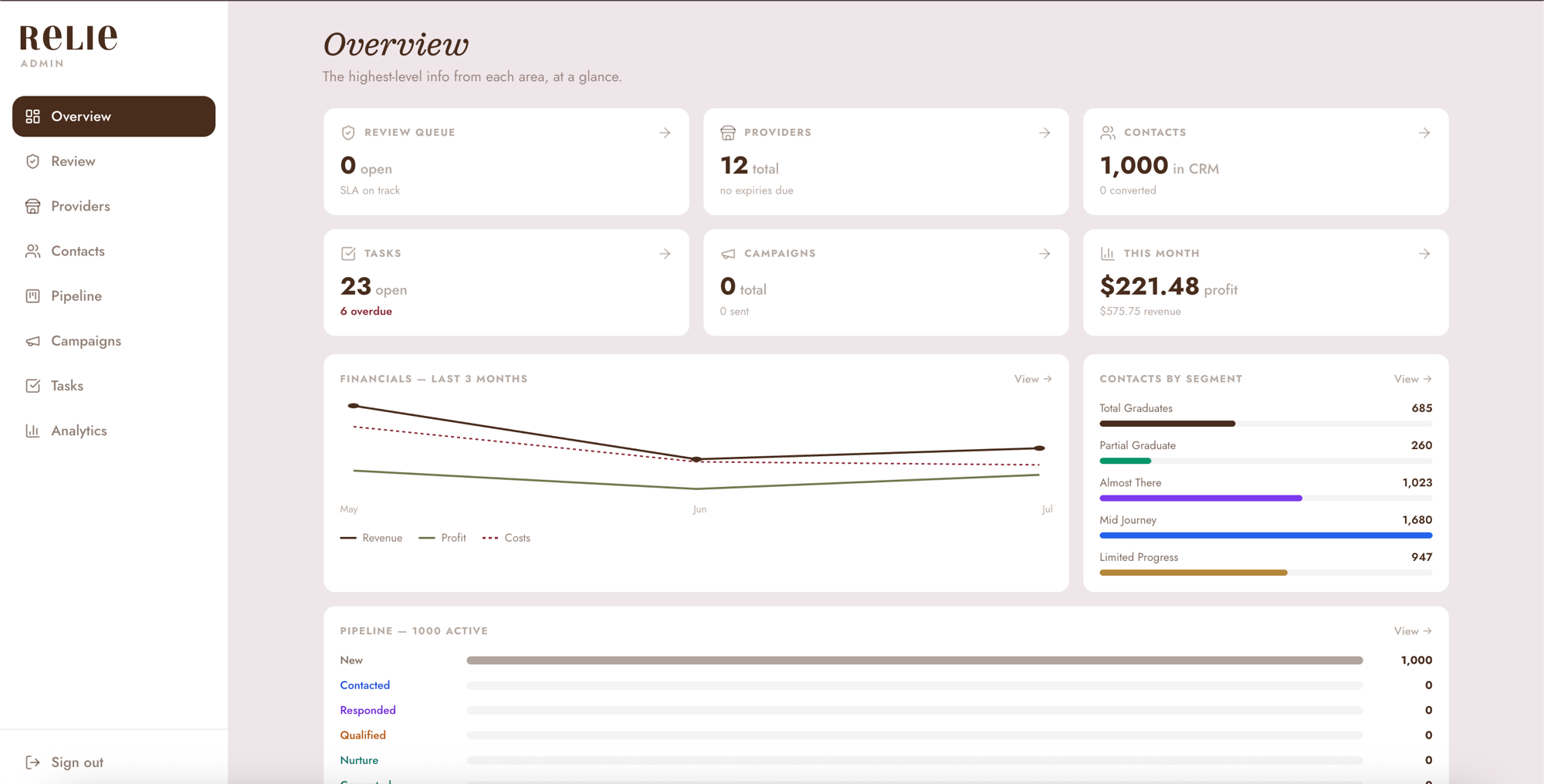
A CRM built around how you actually work.








What does a CRM agency do?
A CRM agency builds, connects and shapes the system your team uses to track customers and deals. That’s three jobs. Development is building a CRM around your process when off-the-shelf tools don’t fit. Integration is wiring your CRM to the systems either side of it so data moves on its own. Consulting is working out what the CRM should do before anyone builds. The point of all three is the same: the CRM should fit how your team already works and stay current without being babysat. It isn’t a product you subscribe to. We build it on your stack, you own it, and it’s priced once rather than per seat, forever.
Why build or integrate a CRM instead of just buying one?
At a certain size the off-the-shelf CRM stops saving money and starts costing it. Per-seat pricing means you pay for every login whether it gets used or not, and the bill grows with the team. The tool’s gaps get filled with other subscriptions, one for reporting, one for forms, one for the thing it can’t do, until you’re running five tools and a spreadsheet to make one CRM work. Your process bends to fit the software’s idea of how you should sell, rather than the way you actually do.
Building or integrating flips that. The system fits your process, connects the tools you already have instead of adding more, and runs on hosting that costs tens of dollars a month rather than thousands in seats.
You spend once to own it, and the running cost stops climbing every time you hire. For most teams past a handful of users, the maths tips within the first year.
Build vs buy
We build custom CRMs, and the first thing we'll often tell you is not to. For a lot of businesses an off-the-shelf CRM is honestly the right answer, and we'd rather say so than sell you a build you don't need. We walk through exactly where that line sits in custom CRM vs off-the-shelf.
Buy off-the-shelf when your sales process is fairly standard, your team is small enough that per-seat pricing doesn't sting, and your needs are the common ones a mature product already handles well. Those tools are cheaper, quicker to set up, and maintained by someone else. For most businesses with a handful of users and a conventional sales process, that's the right call for years. Building custom would be spending money on a problem you don't have yet.
Build custom when the off-the-shelf tool has become the problem instead of the solution. That usually looks like one of three things. Per-seat fees that punish you every time you hire. A stack of extra subscriptions bolted on to cover the base tool's gaps, or a process quietly bending to fit the software's fields instead of the way you work. When you're paying more to work around a CRM than you would to own one, the maths tips, and that's the point a build starts paying for itself.
The honest version of this advice costs us the occasional project, and that's fine. Recommending a fifty-dollar-a-month tool over a ten-thousand-dollar build is a good way to be the people someone calls when they do eventually need one. On a call we'll tell you which side of the line you're on, and if the answer is buy, we'll point you at the right tool and leave it there.
What our clientssay.
Aidan was such a pleasure to work with, he really took the time to understand our business. He built us a custom CRM that plugs straight into our mobile app, so we can handle disputes, verify documents and manage our whole client base without the juggle. So easy to work with the whole way through.
What does success look like?
Six weeks after go-live, your CRM finally tells the truth. Records update themselves as work happens, so the pipeline reflects reality instead of what someone remembered to log. Follow-ups fire on time, nothing sits forgotten in a stage, and the reporting is trustworthy because the data underneath it is current. Your team stops maintaining the system and starts using it, and nobody’s job is keeping spreadsheets in step.
Outgrowing a CRM happens quietly.
Said plainly. The month a business outgrows its CRM is rarely the month anyone notices. It shows up as a spreadsheet beside the CRM, then two, then somebody whose actual job is keeping them in step, and by that point the workaround has been the process for about a year.
CRM FAQs
Buy first. Off-the-shelf CRMs cover most businesses well and cost less than a build. Build only when the tool is forcing your team to work around it: bending your process to its fields, charging per seat for people who barely log in, or needing a stack of subscriptions to fill its gaps. At that point a custom build usually pays for itself.
It’s connecting your CRM to the other systems it should share data with (your store, accounting, support desk, marketing tools) so a change in one shows up in the others without anyone re-keying it. Done properly, the CRM stops being something people have to update and starts staying current on its own.
You own it, so there are no per-seat fees. That’s the main reason custom CRMs pay off for growing teams. You cover hosting, which is usually tens of dollars a month, not thousands. Against per-user SaaS pricing across a whole team, the running cost is usually a fraction of what it replaces.
No. We migrate your existing records and history into the new system as part of the build and check them against the source before go-live. Nothing gets dropped, and the old system stays read-only until you’ve checked the new one yourself. The data is yours throughout.
No. It’s the opposite of a rented platform. Everything lives in your name: the accounts, the database, the source. There’s no proprietary format and nothing only we understand, so a handover pack is enough for another developer to take it over tomorrow. Clients stay because we already know their system, not because leaving is painful.
A focused custom CRM is usually two to six weeks. A full replacement with migration can run longer, and we’ll say so up front. Either way you get a fixed quote and a real date before we start, and we build in stages so you see it working early.
Then we usually integrate and extend it rather than replace it, which is cheaper and less disruptive. We connect the tools around it, automate the updates that people forget, and build the reports it won’t. Replacement is a last resort, not a default.
Outgrowing your CRM?
A couple of lines is enough. It goes straight to Aidan, not a sales team, and if it isn’t worth building he’ll tell you.
- You deal with Aidan directly, not a sales team.
- A straight answer on whether it's worth building, and what it'd cost.
- You own everything we build. No lock-in and no per-seat fees.
Thanks, we've got it.
It's gone to Aidan, not a shared inbox or a sales team. If it's urgent, call 0415 525 006.
Related reading
Workflow Automation (pillar guide)
Workflow automation in plain English: what it is, what you can automate, and how to tell whether it's worth building.
BlogWhat is an AI automation agency
An AI automation agency builds working systems that run your business processes for you. What one actually does, and when you need one at all.
How-toHow to automate business processes
Five steps to automate a business process properly: pick the right one, map it, build it to production standard, and keep it running after launch.