
How-tos
Practical, step-by-step, no fluff.
Walkthroughs for getting AI and automation working in a business, written so you could follow them yourself. Each one gives you the steps in order, with the reasons kept short.
Free, no email required
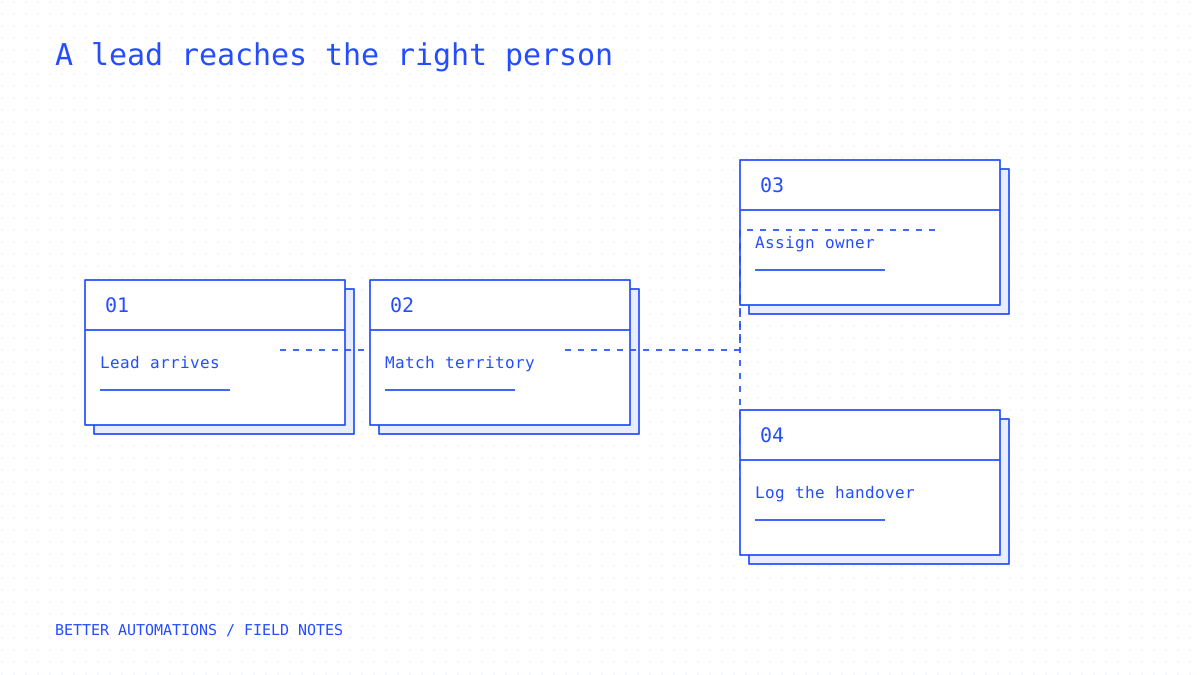
How to build a lead routing workflow
A practical lead-routing walkthrough: normalise a form enquiry, classify it, apply visible scoring rules, update the CRM and test the exceptions before launch.
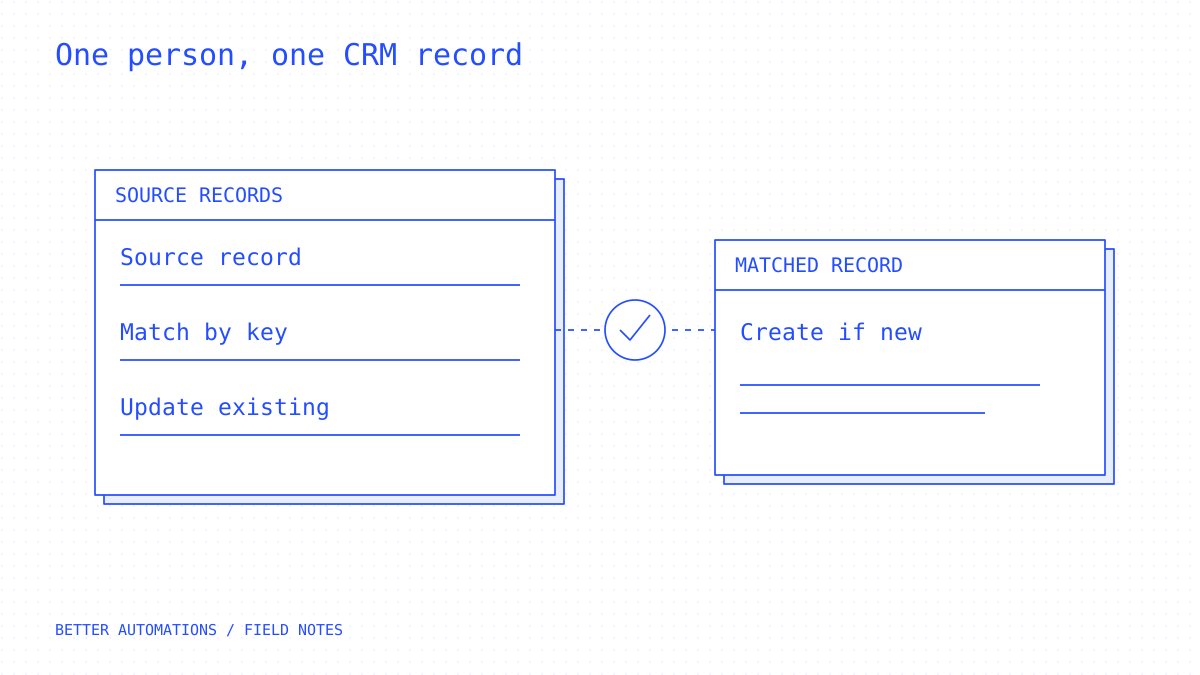
How to connect a CRM without duplicate records
A CRM integration guide covering record matching, field ownership, safe retries and reconciliation, with a worked form-to-CRM example and a launch checklist.
AI readiness checklist
An AI readiness checklist to run before you spend a dollar. Thirteen questions on process, data, people and risk that tell you if a build will pay off.
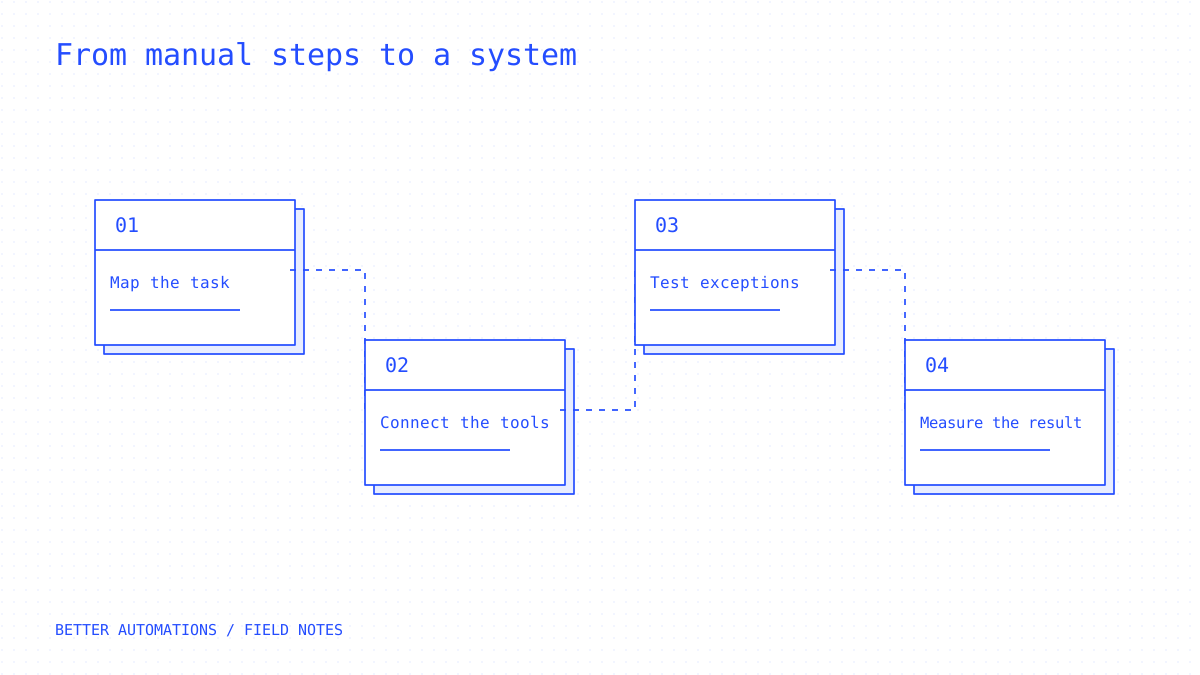
How to automate business processes
How to automate a business process properly, in five steps: pick the right one, map it, build it to production standard, keep a person in it, then measure.
How to train your team on AI
A team starts using AI properly after a hands-on session on the work they already do, not after a lecture. The method we use to make it stick.
ChatGPT for business Australia
Rolling ChatGPT out across a business takes more than handing people a login. Five steps to get real value from it and keep your data safe.
Prompt engineering basics
Prompt engineering sounds technical. It isn't. Five habits that turn vague, generic AI answers into ones you can actually use.
ChatGPT for beginners
New to ChatGPT? Five steps to useful results at work, plus the one rule that keeps you out of trouble.
Do these work without us?
That's the point of them. Every walkthrough here is written so someone inside the business can follow it on a Tuesday afternoon without hiring anyone, and a fair number of people do. We'd rather you read one, try it and find the process isn't worth automating than pay us to reach the same conclusion in week three.
They stop being enough at about the point where two systems have to agree with each other, or where a mistake costs real money. That's when a build starts to make sense. Most of ours run two to six weeks and land between $3,000 and $15,000. If a guide gets you there on its own, that's a good outcome, and there's no invoice.