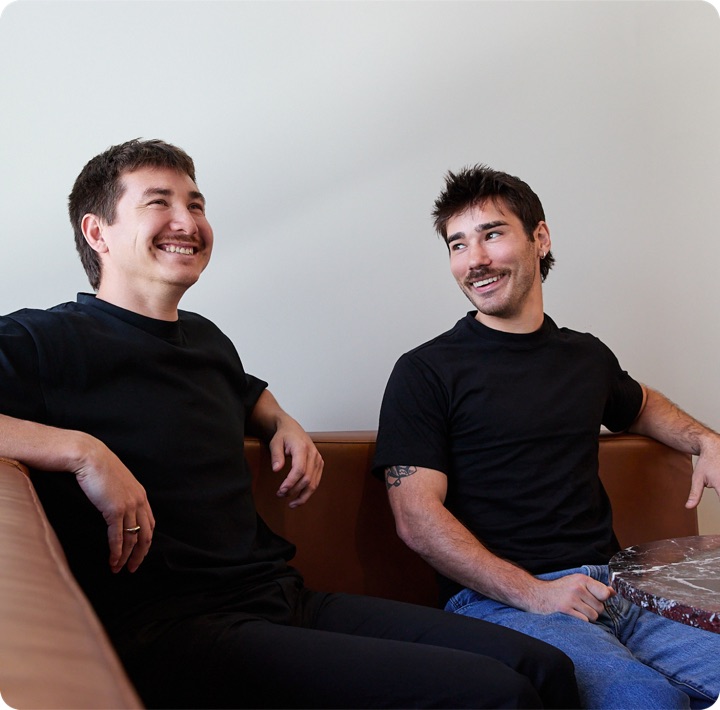
Why we started this
We came at the same problem from opposite ends. Aidan spent years building websites, apps and internal software, watching good businesses lose their week to work a computer should have been doing. Caleb spent nine years in digital marketing, watching good leads come in the front door and quietly leak out of a spreadsheet nobody had time to maintain.
Same disease, different symptom. In both cases somebody was doing by hand a job nobody had got around to building the machine for, usually because the person who could build it was busy and the person doing it didn't know it was fixable.
That's the business. You tell us what's eating the week, we tell you honestly whether it's worth automating, and if it is, we build it properly and hand it over. If it isn't, we say so. We'd rather lose a project than sell you one you didn't need, mostly because the alternative is six months on something neither of us is proud of.
Here's the part that usually goes unsaid on an about page. There are two of us, which puts a real limit on how many builds run at once, and there are months where the honest answer is that we can't start for six weeks. We'd rather say that than take a deposit and put you in a queue. It also means nobody gets handed to someone junior, because there isn't one.
What we're not here to do
Automation gets sold on headcount. That isn't what we sell. If fewer people is the brief, we're the wrong build, and we'll say so on the first call. What we're actually selling is time: the hours that disappear into re-keying a form, chasing a document or rebuilding the same report every Monday. Give those back and people spend them on the work they were hired to do, or on something that isn't work at all.
There's a line we don't cross. We won't build AI that pretends to be a person. No cloned voices on a call. No synthetic sales rep. Where a bot answers first, it says so, and a person is one reply away. The technology is genuinely good at reading, sorting and drafting, and that's where we leave it. A person still sends it and signs their name to it.
Most of what makes a business worth dealing with happens in the conversations, and those are the first thing to go when someone is buried in admin. The point of the whole exercise is to hand that time back, so there's more of it for the parts a machine has no business touching.
What we actually work on
Two halves of the same job. Marketing efficiency covers the campaigns, reporting and lead work that should run itself. Operations efficiency covers the approvals, data entry and handoffs that quietly eat a business. Between them sit the things we build most often: AI agents, CRMs, and integrations that make software talk. The full list lives under services, and the systems we've actually shipped are on our work page.
We work with teams right across Australia from a base in Melbourne, which just means that if you're local we'll happily do the consulting or the training in your office rather than over a call. Everything else works fine remotely, and most of our clients aren't in Victoria.